Tobias Elwood, a former UK Defence Minister has written a perfectly fair piece in the Times in which he said. “Afghanistan and Iraq are cautionary tales”. The media commentariat are invariably supportive of this line, ‘wisely’ noting that ‘History Repeats Itself.’ But it does not. Some things are the same and some are different and we need to think hard to find the difference.
A large error in Iraq was so called de-Bathification in which all members of the Baath party were removed from all offices. It was imposed by Bremner shortly after arrival in Iraq as the senior American political appointee. Many were alarmed at the simplistic folly of the policy because Debathification removed those with power, but also those with expertise. It also effectively released Saddam’s Sunni intelligence apparatus to create AQ in Iraq.
On the other hand in WW2 when General Gracey, late of 14th Army, occupied Korea with 20,000 troops in 1945 he briefly rearmed the Japanese occupiers in order to save Saigon from the Viet Minh. He found the Japanese soldiers efficient and praised their performance. His action was much debated afterwards but Gracey pragmatically separated the ‘values’ of Japanese soldiers from their competence. He was not doctrinaire or hateful, at least not then.
Iran is not Iraq in so many ways. (much bigger, higher levels of national exceptionalism, champions of Shia Islam etc). Maybe the error in 2003 was invading Iraq in the first place; or maybe disaster arose from the doctrinaire imposition of democracy afterwards. Also, if the 2003 invasion of Iraq had not happened would MBS be reforming Saudi? This is exactly the kind of domino effect the American neocons envisaged when they advocated for the invasion. The lessons from Iraq (and now Venezuela) might suggest finding a pragmatic IRGC commander in Iran who will work to new rules.
Then there is Afghanistan which has always (always!) been easy to invade but then hard to control or govern. The invaders common error has been to dictate how Afghans should live. We cannot know if narrow, post 9-11 keep-AQ-out-objectives, would have succeeded in Afghanistan if wider nation-building objectives had not been added, then under resourced. In the 80s the Russians had a quiet time in Afghanistan to start with and then it heated up at about the same time as they tried to impose Marxist land reforms. Narrow objectives of getting Iran to stop externalising its militancy are probably more achievable than reforming what Iran is. Furthermore, religion cannot be simply wished away and what ever the outcome of the current hiatus in Iran there will remain a religious theocracy who will demand and fight for a role.
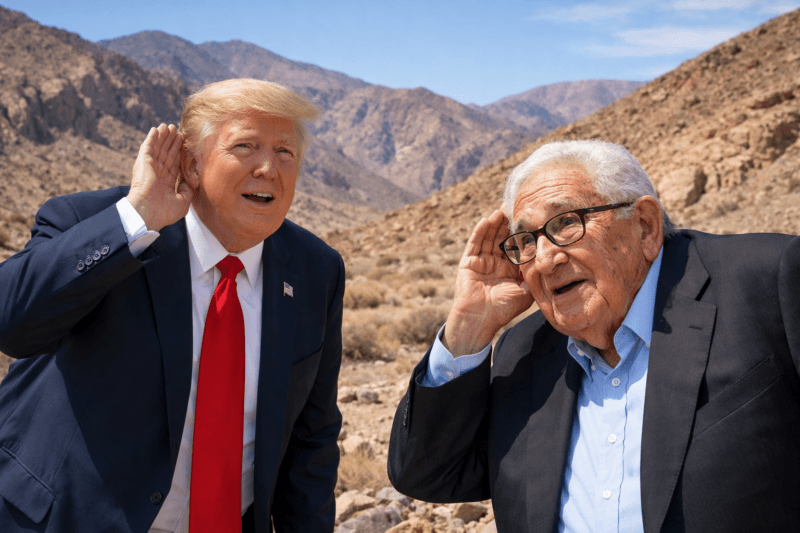
It does look as if Trump has adopted to the Kissinger geopolitical playbook about South American dictators ” I know he is a son of a bitch but he is our son of a bitch” a ruler who knows and accepts new boundaries but is then largely left alone.